Pulse Check · October 22, 2026 · Edition 7
The software checked it. Did anyone check the software?
AI inspections on New York transit, a parts agent at 18 gas sites, Amazon's union risk scores, and Connecticut's new monitoring notice.
AI reads 100 pages of rail inspections and spots every defect the humans did
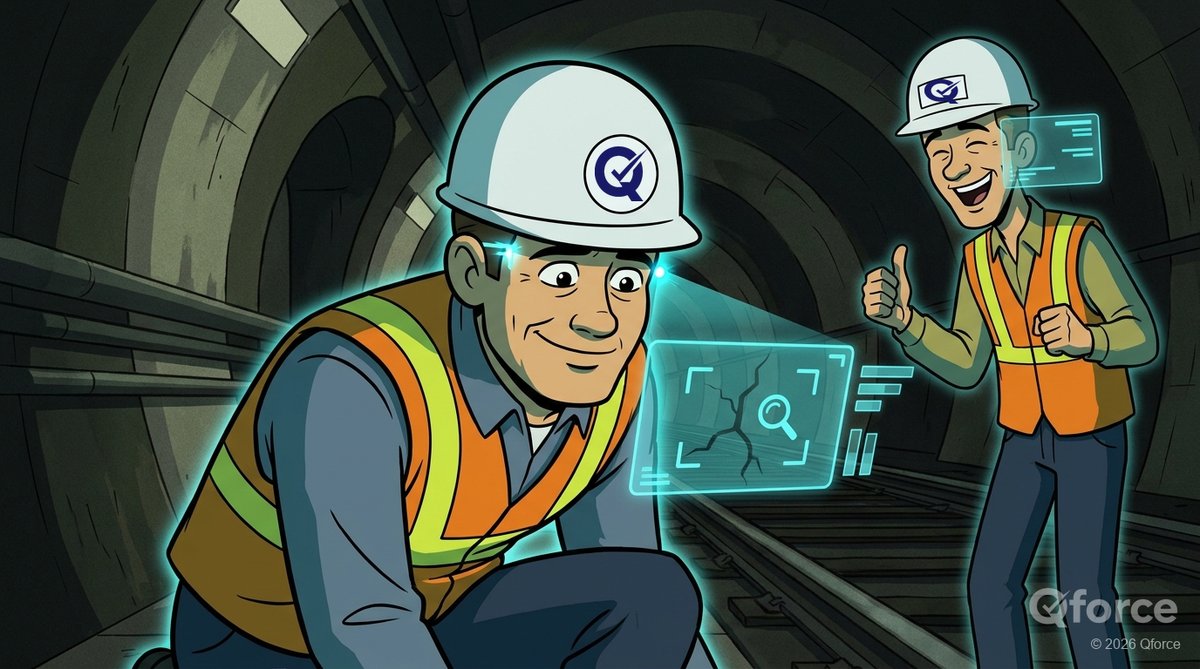
Seventeen tech companies spent eight weeks with New York's transit agencies, and the Transit Tech Lab published the results on October 19. One system turned hundreds of photos and 100 pages of inspection notes into a single picture of the track, and found every defect the Port Authority's own report had listed. Not bad for software that has never walked a track. It did rate severity differently in 14% of cases.
With Qforce Pulse: the inspector photographs the defect, the AI reads the photo and suggests the finding, and the inspector confirms or corrects it on the spot. You see the photo and both calls, so the gap is visible instead of buried in a report.
Source: statescoop.com
A gas company's AI agent orders spare parts in Teams, and nobody is woken at 2 a.m.
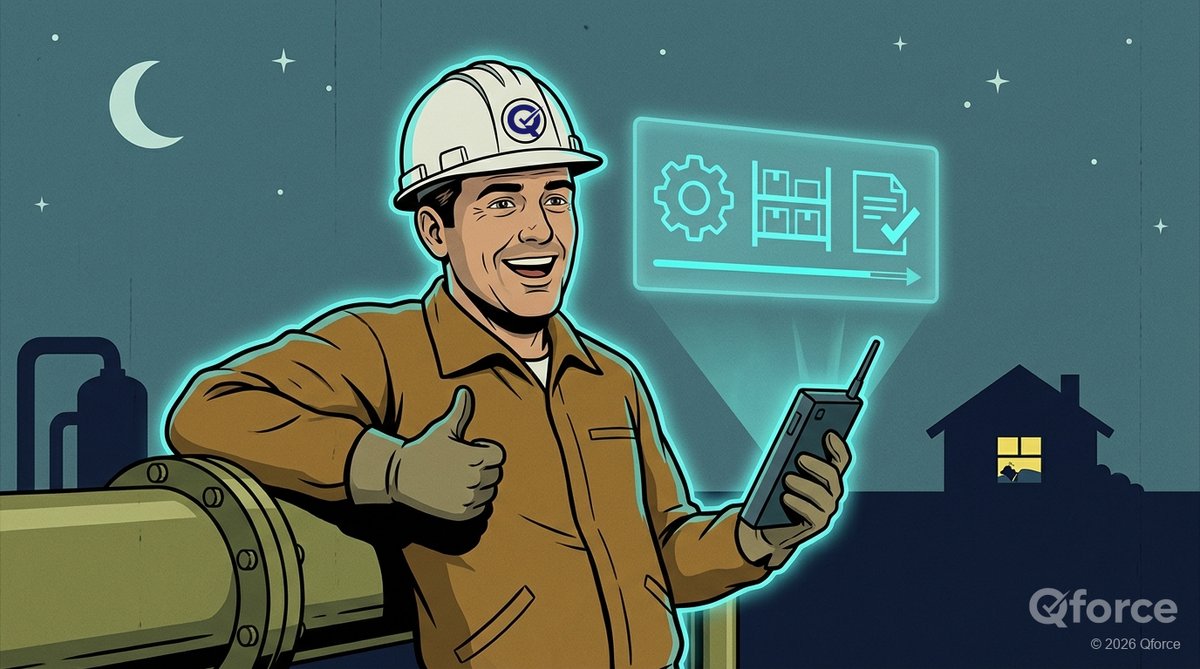
Kodiak Gas Services runs gas compression equipment, which breaks at inconvenient hours in inconvenient places. Its field technicians now have a new colleague: an AI agent in Microsoft Teams called Material Replenisher. A technician types the part they need; the agent checks inventory and suppliers, raises the order and sends it to a person for approval. More than 150 requests a day across 18 sites, each in two to three minutes instead of 15 to 20, the company says. And nobody gets woken at 2 a.m.
With Qforce Pulse: a technician scans the asset's QR code, logs the fault with a photo, and the ticket lands with whoever approves the repair, time-stamped at every step until it is closed. Nobody is woken at 2 a.m. here either.
Source: constellationr.com
Amazon turned staff surveys into a union-risk score for every warehouse
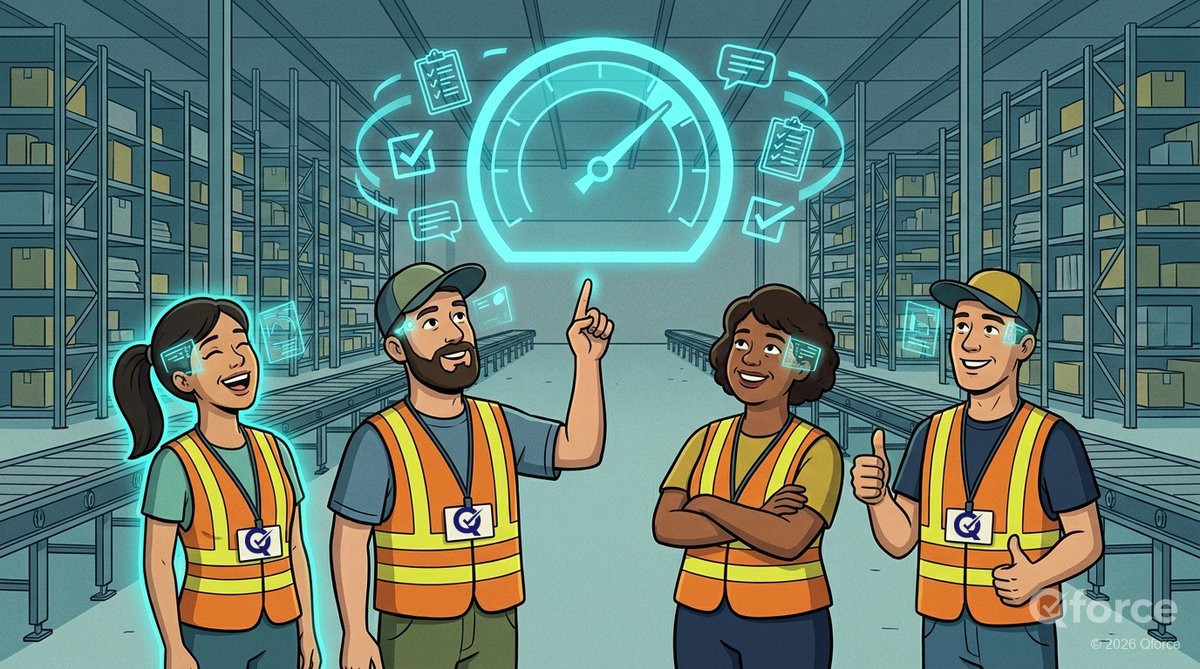
This one we did not see coming. Amazon training documents, surfaced in a Canadian labor case and reported by openDemocracy, describe Atlas, an in-house AI that scores every warehouse from 100 to 900 on how likely staff are to unionize. The inputs: Reddit posts, and workers' own answers to internal feedback surveys. Sixteen sites in the United States, Canada and Britain sit in the top tier. Amazon says Atlas shows where staff need support.
With Qforce Pulse: run your site check-ins and feedback forms through Pulse, where every answer is a record the worker can see and the manager reads the same data. Ask it questions in plain language. No hidden score.
Source: opendemocracy.net
Connecticut puts the cameras and trackers on a sign by the door
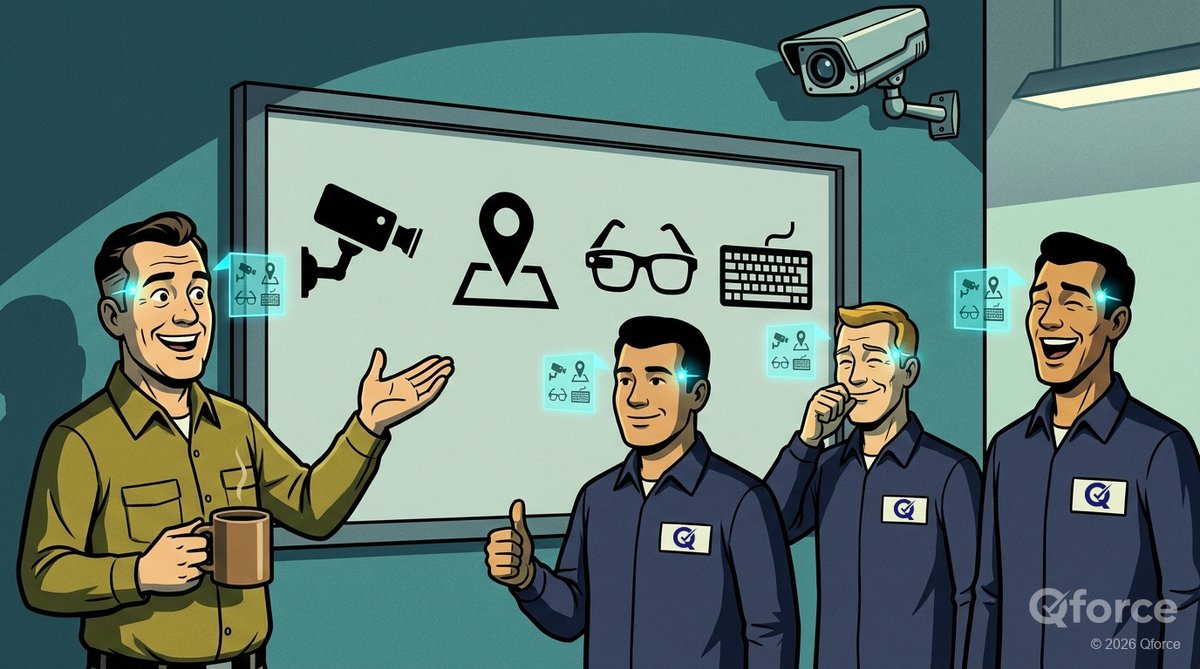
The rules are catching up. Since October 1, Connecticut employers must give written notice before monitoring staff electronically, under Public Act 26-73. The notice lists what kind of monitoring and where, whether a factory floor, a sales floor or a company truck, and goes up where people can see it. Law firm Ogletree's list of what counts: cameras, GPS trackers, smart glasses and keystroke tracking. Fines run from $500 to $3,000.
With Qforce Pulse: the record is made by the worker, not a camera: photos, checklists and sign-offs they create themselves, time-stamped in one audit trail. An easier line on the notice, and an easier conversation with the team.
Source: ogletree.com
One big number
39%
of maintenance and operations professionals say their whole team consistently uses the maintenance software, though 82% say their organization has it. Limble, which sells maintenance software, surveyed 686 US professionals. The same teams reckon they complete just 54% of scheduled preventive maintenance. All the clever AI above runs on data somebody typed in.
More adventures
Fewer driving-hours violations, says the vendor. A 35-vehicle fencing contractor cut hours-of-service violations by 88% with in-cab alerts from fleet software maker Motive, the company says.
Shared logins on the floor. 95% of 700 IT and security leaders surveyed by Sapio Research had seen frontline workers share passwords or dodge multifactor prompts in the past year.
Exoskeletons and hazard spotting. In a Texas A&M study of 16 construction workers, lower-back exoskeletons cut fatigue by 37% and improved hazard recognition by 29%.
Who checks the software at your sites? Hit reply and tell us, even if the answer is a whiteboard.
Wrestling with something at your sites?
Inspections, incidents, rosters, or where AI actually fits. Tell us about it, or book a free 20-minute consultation with the Qforce team. No strings.
Schedule a free consultation